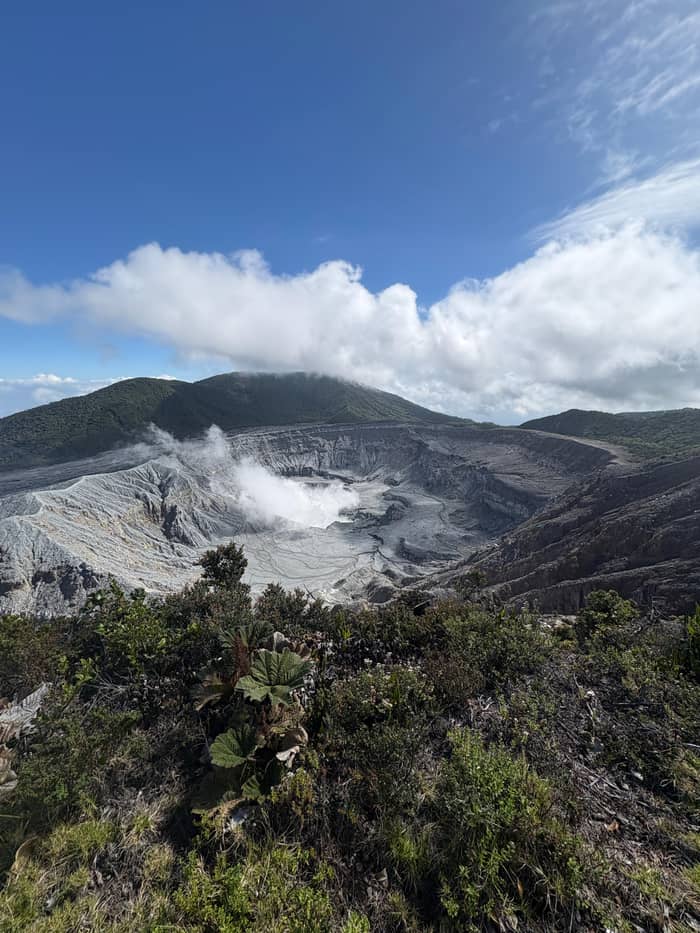
Shortest
The slope tasting
A farm only
- Time1 hour
- You doPlant a seed, roast, grind
- Pricefrom $25
Guides
Language
Currency
See availabilityfrom $105 · cancel without payingSee your group's price
Poas Volcano day tour from San Jose
★ 4.4 · 709 reviews so far
The quick take
A Poas Volcano and coffee tour pairs the crater with a farm tasting, and ICAFE gives the Central Valley harvest as November to mid-March.
Coffee in brief
Choose from 3 options
Pick a party size and compare the estate tour, the slope tasting and the full day from San Jose.
≈
View≈
View≈
ViewConverted at the ECB reference rate, from-prices as listed by GetYourGuide. The precise amount is shown when you book.
Planning a Poas Volcano and coffee tour? See where the coffee grows on the flanks, when the harvest runs, what a farm visit shows and which listings add a tasting to the crater day.
Editorial team, poasvolcanotour.top · Updated November 24, 2026 · 8 min reading time
Basics
Coffee and the volcano share a valley long before they share a tour bus. The national coffee institute, ICAFE, describes the Central Valley as the provinces of San Jose, Heredia and Alajuela, and it says the volcanoes Irazu, Barva and Poas feed the soils where the grain is grown.3,4 A day that pairs a crater with a plantation joins two halves of one landscape, and that is why the pairing feels natural on the road out of the capital.
The home tour of this site does exactly that. Its itinerary gives the park 1 hour and La Paz Waterfall 1.5 hours inside a day that starts with a hotel pickup, and its highlights add a coffee farm with a tasting. The record gives the farm no timed slot of its own, so treat the coffee as one stop folded into a long day, and read the other listings below if the farm is the main reason you are coming.
If coffee matters more to you than the crater, there are shorter options. One listing is a coffee estate tour of 2 hours and another is a farm tour of 1 hour on the volcano slopes, and each can be booked without the park. The sections that follow explain what grows here, when the harvest runs, what a farm visit shows and how to choose between the formats on offer. Read them in order if the subject is new to you, or jump to the table if you already know what you want.
Side by side
| Option | Coffee time | Rest of the day | Starting price |
|---|---|---|---|
| Slope tasting tour | 1 hour | A farm only | from $25 |
| Doka estate tour | 2 hours | A farm only | from $35 |
| Home tour of this site | A farm with a tasting | Park 1 hour, falls 1.5 hours | from $105 |
| Coffee, falls and park day | Doka 1.5 hours | Falls 30 minutes, park 2.5 hours | from $105 |
| Breakfast and tasting day | Doka 1 hour plus 1 hour | Park 1 hour, falls 45 minutes | from $105 |
| Semi-private day | A farm visit, premium coffee | Crater and lagoon trails | from $135 |
| Doka breakfast day | Doka 2 hours | Park 105 minutes, gardens | from $170 |
Prices are starting prices, not exact quotes, and times are the stop lengths in each listing's record.
The coffee here is arabica. The Tourism Board names Caturra and Catuai as the prized varieties and says planting Robusta has been prohibited by law.5,6 ICAFE adds that the Central Valley zone climbs from 800 to 1,600 m above sea level, with more than 80% of the bushes between 1,000 and 1,400 m.2 Anyone hunting for a coffee plantation near Poas Volcano is looking at one corner of that wide altitude band.
Ash and height shape the cup. ICAFE says the Central Valley soils carry a slight acidity from volcanic ash, and that the altitude of the valley affects bean size and hardness and some parts of cup quality, above all acidity.7,8 The same page credits the volcanic soils and the climate for a cup with a chocolate note.9 None of that is visible from a road, which is part of why a guided walk through the rows is worth the time.
The Tourism Board lists the Doka Estate coffee tour at San Luis de Sabanilla in the province of Alajuela, and several full-day listings send guests there on the way to the park.10 The crop is older than the park itself: the Tourism Board dates the first beans to 1779, brought from Cuba, and says that by 1832 the golden grain was one of the main exports of Costa Rica.11,12 The Doka record also lists the history of the estate and its family among its highlights.
Time at the farm
Stop lengths from the records: the slope tasting 1 hour, the Doka stop on one full day 1.5 hours, the Doka estate tour 2 hours and the Doka breakfast day 2 hours.
A farm tour is, in the Tourism Board's words, one of the most popular coffee options, led by a local who knows the place.13 It starts in the field, where cherries on small farms are handpicked, and the board says mill owners in each growing region agreed to pick by hand and take only ripe cherries.14,15 Watching someone choose a red cherry from a green one is the quickest way to understand why the cup is priced the way it is.
Processing is where flavor gets argued over. Costa Rica pioneered the honey process, which de-pulps and washes the cherries after fermentation but keeps some of the mucilage on the bean, and the board ties it to sweet, fruity notes.16 On the Doka tour the stations include the nursery, the wet mill, the drying patios and the roasting room, and the walk finishes with a coffee sample. Ask your guide which method the farm uses for its own lots.
The slope tasting listing is the most hands-on. Its highlights promise that you plant a coffee seed, take part in pulping, drying, hulling, roasting and grinding, and drink a cup brewed the traditional Costa Rican way. That traditional method uses a chorreador, a wooden stand that holds a cloth filter, which gave the drink its old nickname aguas de medias, or sock water.17 It is a gentler, slower cup than an espresso, and a tasting is the place to try it.
Pick your format
Tap what you care about most and the listing that fits it sits beside it, with the reason.
If I only want coffee, no volcano
The estate tour
A 2 hour walk through the estate with a sample at the end.
If I want the shortest tasting
The slope tasting
1 hour on the volcano slopes with a hands-on part.
If I want crater, falls and coffee
The home tour
Crater, falls and a farm stop, with the park ticket folded in.
If I want a small group
The semi-private day
A limit of 8 guests on a day of 6 hours.
If Someone uses a wheelchair
The two short tours
Both records are flagged wheelchair accessible.
Three formats
Shortest
A farm only
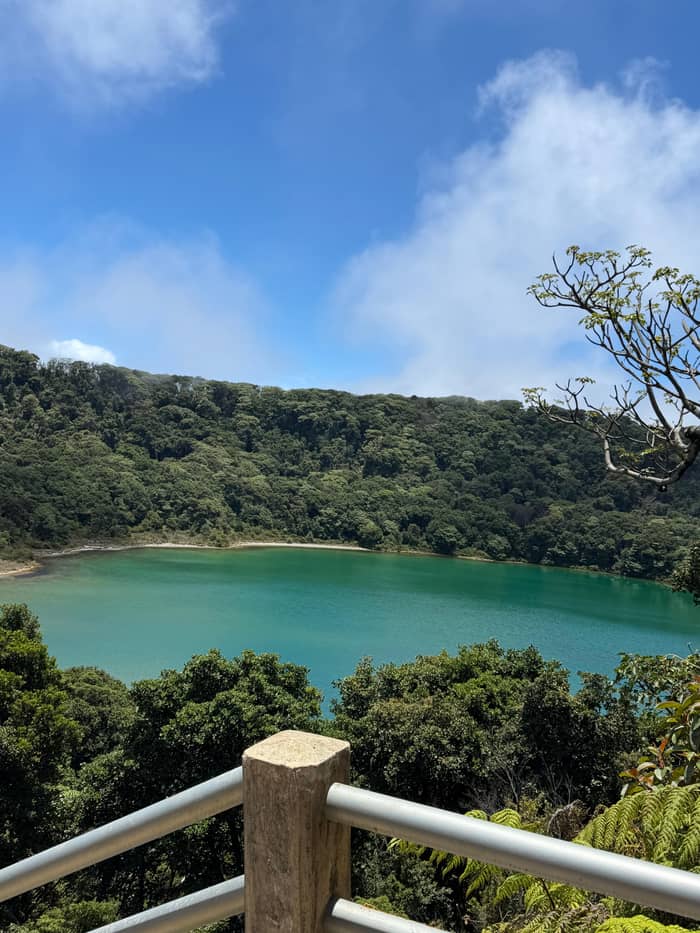
Estate
Nursery to cup
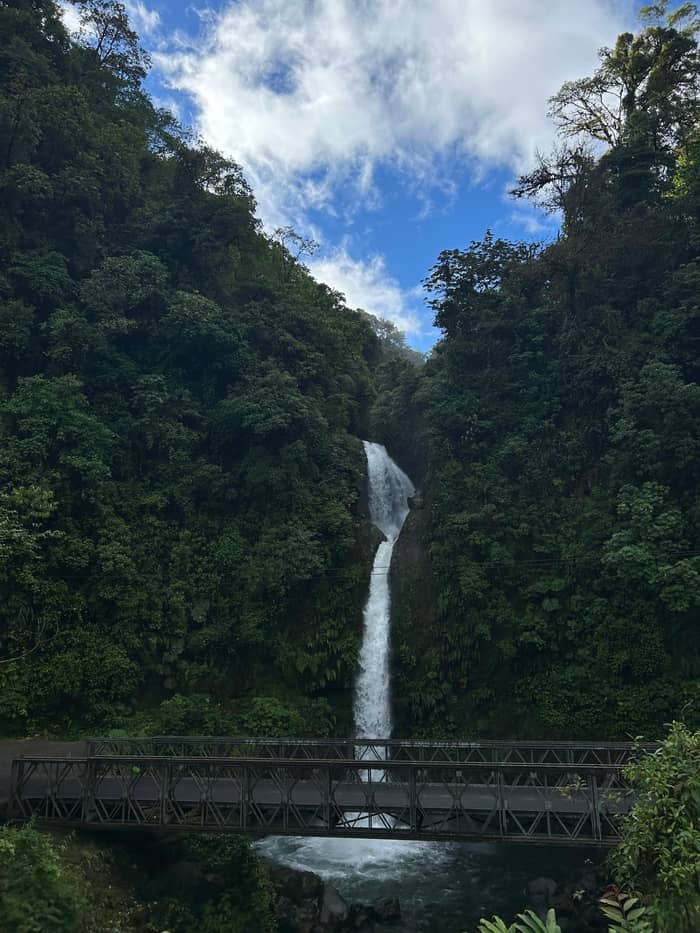
Small group
Crater and a farm
ICAFE gives the Central Valley harvest as November to mid-March on its regional page, while the table in its frequently asked questions says picking starts in October and ends in February or March.1,21 The same site says picking begins in October in the Central Valley, the Western Valley and the northern zone, with the best moment of the harvest in December.22 The two pages disagree by a few weeks at each end, so plan around the middle of the window rather than its edges.
Match that window to the weather. For the Central Valley the Tourism Board counts the dry months as December to March and the rains as May to October, while its national calendar turns at mid-December and again at late April.23,24 A coffee tour near Poas Volcano in January therefore falls inside both the dry season and the picking window, while one in July sits in the rains and outside the window.
Inside the rainy period there is a pause: the board describes a popular veranillo at the end of June, called the Veranillo de San Juan.25 The same board adds that green-season showers arrive in short bursts and the crowds thin out.26 Higher up the park has its own climate: SINAC describes a cold mountain where drizzle falls through much of the year, so pack a jacket even if the farm below felt warm.27
On the estate
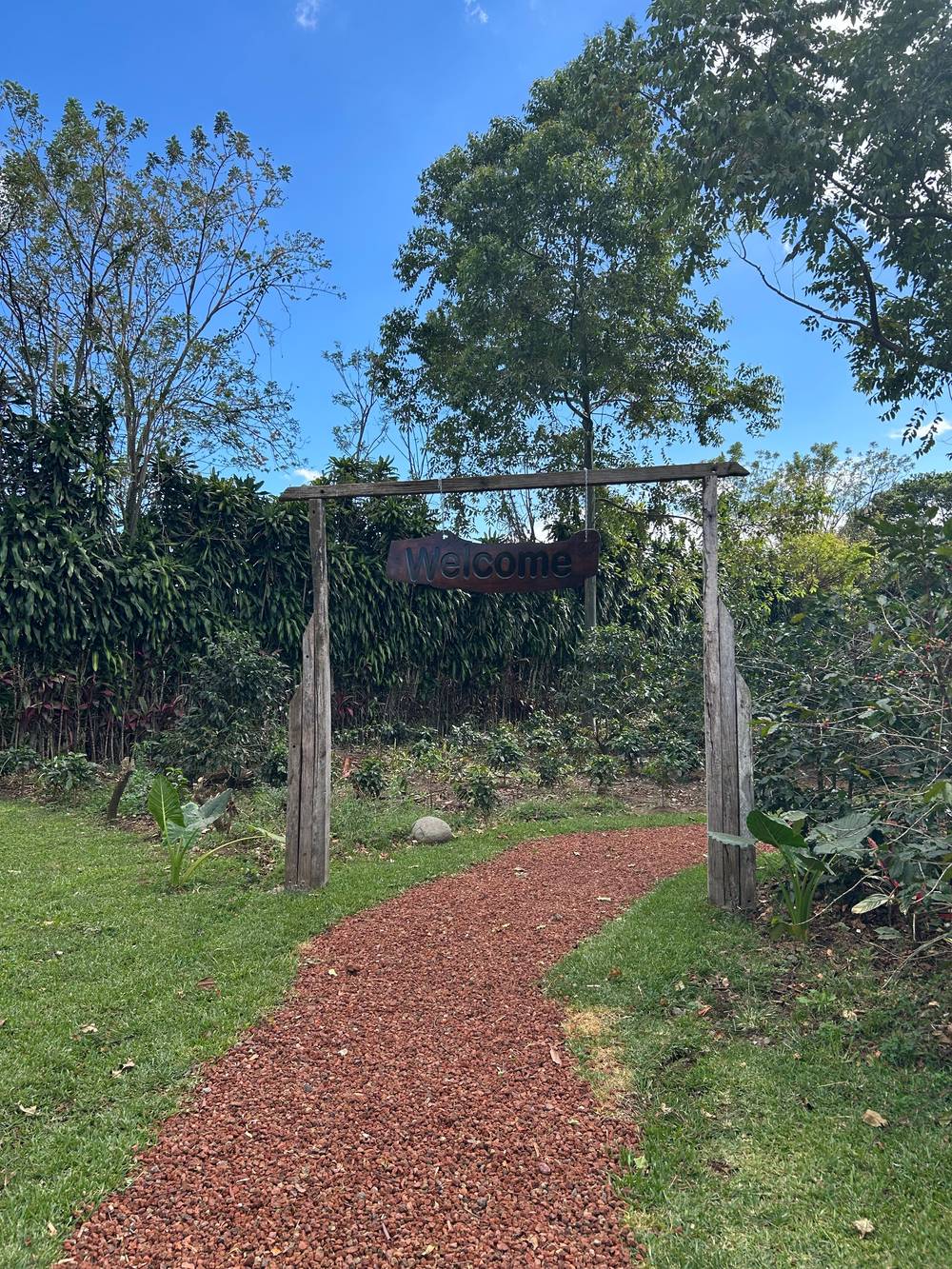
Welcome
The Doka tour opens with a welcome drink before the walk.
The nursery
The walk includes the coffee nursery, where young plants are raised.
The wet mill
The wet mill is one of the stations on the estate walk.
The patios
The drying patios are another stop on the route.
The roasting room
The roasting room is another working station on the estate route.
The sample
The tour includes a coffee sample as part of its 2 hours.
The listings that sell coffee near the volcano fall into families: short tastings that skip the crater, full days that fold a farm into the park route, and one small-group day built around the farm of an international coffee chain. Set side by side in the table, they show how long each one spends at a farm and what it costs to start. The prices here are opening figures, and they can shift once you choose a date.
The short tastings are the cheapest way in. The Doka estate tour starts from $35 for 2 hours, and the slope tasting starts from $25 for 1 hour. The Doka record wants guests at the coffee tour reception 15 minutes ahead of the start, a detail that matters if you reach the estate by bus instead of on a pickup. Both are listed on their own, without the park, so each can fill a half day by itself.
The full days start from $105 for the home listing and for two others that pair coffee with the park and the falls, while a longer day with breakfast at the estate starts from $170. The semi-private day starts from $135 for 6 hours with no more than 8 guests, and it visits the farm of the American coffee chain with an included premium coffee. Read the stop lengths in the table as well as the prices, as the same figure buys a different mix of farm, park and falls.
Video
Tanya & Chris Travel on YouTube · The video stays unloaded until you press play.
A farm tour is one of the most popular options, led by a knowledgeable local.
Before you go
Order differs between listings, and the records show it. One full day rides 45 minutes, spends 1 hour at the Doka Estate for breakfast and another hour on the tasting, rides 30 minutes to the park for a guided visit of 1 hour, and ends with 45 minutes at La Paz Waterfall. Another goes to the farm for 1.5 hours first, then the falls for 30 minutes, and finishes at the park for 2.5 hours.
Check the order before you book. SINAC cautions that the weather at the lookouts shifts and the headline sights are not always visible, and one day-tour record adds that cloud can wrap the volcano at any hour.28 The park opens at 8 AM, so a day that reaches the crater late has a different feel from one that arrives at opening time.29 Both are fine; they are simply different trades, so weigh which one suits your day.
The park block also varies in length. The records give the park 2.5 hours in one day, 105 minutes in another and 1 hour in a third, so compare that block with the farm block when you choose. If the crater is your priority, favor the longer park block; if the farm is, favor the listing that gives the farm most of the morning. Ask the operator for the planned order on your date; the record is the starting point, not a promise.
Both short tours are listed as wheelchair accessible, and the slope tasting adds that it suits senior citizens and people with mobility problems and gives children priority to take part. Accessibility is not uniform: the Tourism Board lists route, weather, upkeep and equipment as things that change it, and it asks you to check with the provider before you travel.18 A short message costs nothing and avoids a wasted trip.
The Tourism Board names Hacienda Alsacia as the Starbucks coffee farm in Costa Rica, and the semi-private listing visits it for an included premium coffee.30 That listing is the one to pick if a named farm is the point of the day for you. Heredia has a long-running alternative: the board lists the Cafe Britt coffee tour as a year-round attraction open seven days a week, handy for another day of your trip.31
Coffee pairs with other tastes, too. The Tourism Board says a coffee tour can be combined with chocolate and sugarcane experiences, and that a plantation tour shows large-scale operations that mix modern technology with traditional practice.32,33 Whatever you choose, buy a bag at the end only if you will drink it soon, and keep the receipt of the farm in case you want to find the same lot again.
FAQ
The highlights of the record name a coffee farm and a tasting, though the timed itinerary lists the park and the waterfall as its stops.
The slope tasting is 1 hour and the Doka estate tour is 2 hours, while the full days give the Doka Estate between 1.5 and 2 hours.
Both short records are flagged wheelchair accessible, and the slope tasting gives children priority to take part.
Each record allows a no-cost cancellation as late as 24 hours ahead of the start, and payment is not taken at booking.
Several full-day listings name the Doka Estate as the coffee stop, and one small-group day visits Hacienda Alsacia instead.
Sources
Planning Poas Volcano from San Jose? Ask a real person here.